How the Strong Dollar Is Quietly Killing Agricultural Exports
The price on the elevator board is partly a currency story. Here is how a strong dollar quietly makes American crops and meat harder to sell abroad.
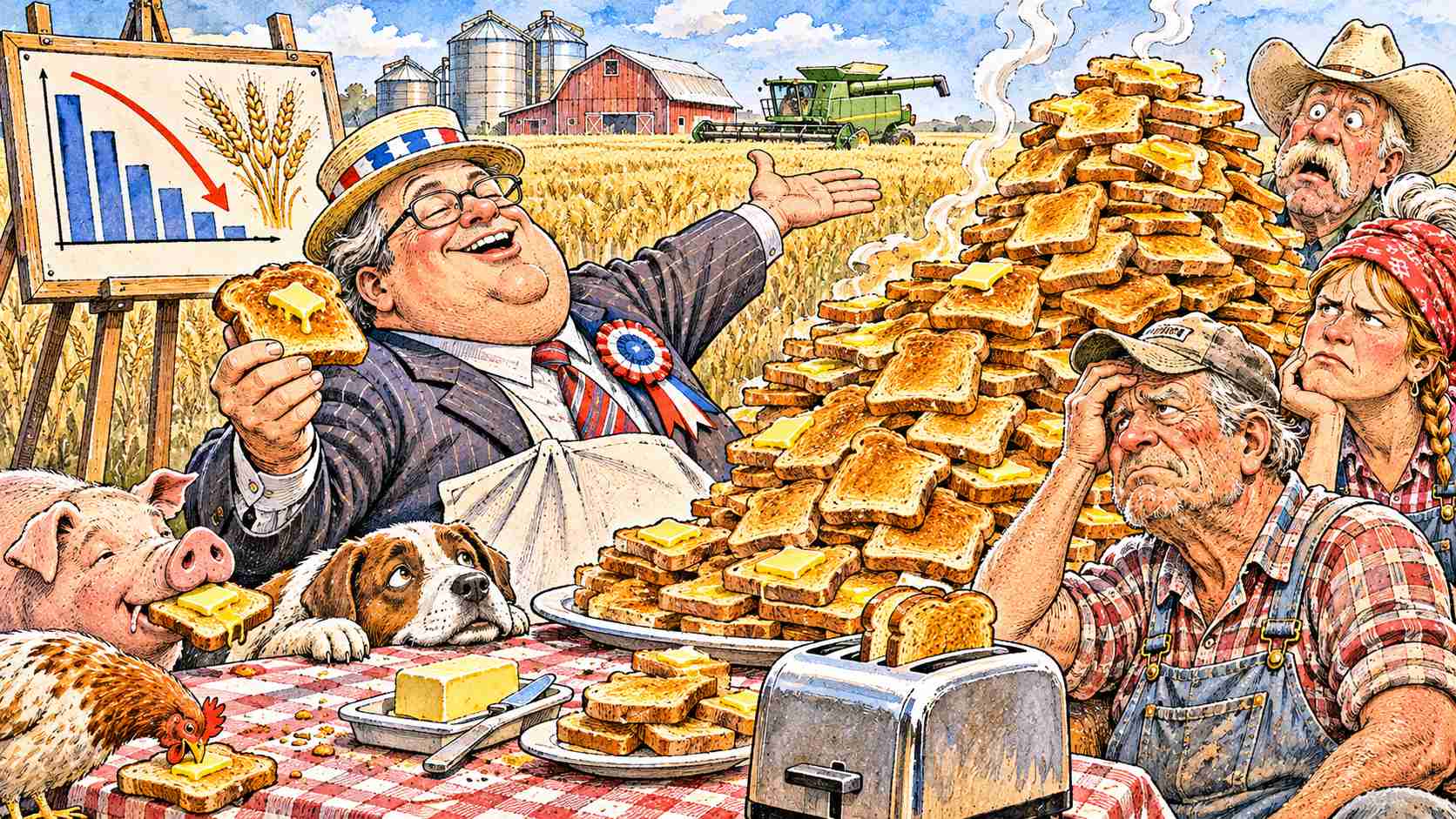
How does the dollar affect a farm product?
When the dollar gains value against other currencies, a bushel of wheat or a pound of beef costs more for a foreign buyer who pays in their own money. Even if the dollar price does not change, the buyer's cost rises. Buyers may then purchase from competitors whose currencies are weaker, or buy less. Exporters see weaker demand and lower bids follow.
The title says this happens quietly, and that is true: the price on the board drops with no announcement, and the cause is a currency move in a market most farmers never see.
A hypothetical example: if a foreign buyer's currency drops by a tenth against the dollar, the same dollar-priced shipment costs that buyer roughly a tenth more. The farmer may not see a bill, only a softer bid, but the cause is the same.
Which commodities feel it most?
Products that depend on export markets and compete with other countries' crops are the most sensitive. Competing suppliers such as Brazil, Argentina, Australia and others sell the same goods, and when their currencies weaken against the dollar their prices look better.
In Oklahoma, wheat, cotton, beef and other exports can feel the effect, though domestic demand and local conditions matter too. USDA Foreign Agricultural Service publishes export data and market reports, and the crop guide and beef and cattle guide on our sister sites cover marketing.
Livestock is also affected. Beef and pork exports are priced in dollars too, and a strong dollar can weaken foreign demand for American cuts, which shows up in cattle prices over time.
Where do you see the numbers?
Exchange rates and economic data are public. FRED charts currency indexes and other series, and the Federal Reserve publishes information on exchange rates and monetary policy. USDA ERS analyzes how currency affects farm trade, and the U.S. International Trade Commission provides trade data.
Check current values yourself. Currency moves can reverse, and any chart you see today may look different next season.
Look at the relationship over several years rather than a single month, and compare with commodity prices to see whether the pattern holds.
When you read any currency chart, note the date range and the index used, since different measures weight trading partners differently and can tell slightly different stories.
Why does the dollar get strong?
Many forces play in: interest rates, economic growth, investor demand for safe assets and relative inflation. A rate decision by the Federal Reserve can influence currency values, but it is one factor among many. The U.S. Treasury and the Fed explain how those policies work.
No farmer controls any of this, which is why many ask for tools to manage the risk instead of hoping the dollar weakens.
Farmers sometimes ask whether the government can lower the dollar. Currency policy is a complex area with international rules, and no simple lever exists. Be skeptical of any promise that claims otherwise.
What do different economists say?
Some economists argue that a strong dollar is a sign of a healthy economy, that it lowers import costs including some farm inputs and that exports have remained strong in other periods. Others emphasize that the strong dollar is a drag on farm income and that the benefits go elsewhere.
The facts are disputed in how much of a price move can be blamed on the dollar, since trade policy, weather and demand matter too. Read analyses from farmdoc daily and the Kansas City Fed for different views.
A balanced view accepts that the dollar is one of several forces on farm prices, along with weather, stocks and demand at home, and that no single explanation covers every move in the market.
What can a farm do about it?
You cannot control the dollar, but you can plan around it. Use forward contracts, crop insurance and marketing tools. Build a break-even analysis so you know when prices stop paying. Diversify buyers where possible, and talk to your elevator or marketing advisor about how currency risk shows up in your bids. OSU Extension offers market outlooks.
For more, farm.FM has agribusiness and farm news coverage, and a farm.FM story on the strong dollar adds to the picture. Nothing here is financial advice.
Keep the long view. Currencies swing in cycles, and a period of dollar strength has historically been followed by weaker periods, though no one can say when. Plan for both.
Sources and further reading
- USDA Foreign Agricultural Service: export markets and trade data
- FRED: Federal Reserve economic data
- Federal Reserve: U.S. central bank
- USDA Economic Research Service: farm economy data and analysis
- U.S. International Trade Commission: tariff and trade data
- Kansas City Fed Agriculture: farm credit and land value surveys
Ask locally: Ask your grain elevator, an OSU Extension marketing specialist, or your marketing advisor.