The $605 Billion Debt Cliff: Why Farm Sector Borrowing Is Outpacing Equity
Big farm debt headlines get attention, but the number that matters at the kitchen table is how your own balance sheet is moving. Here is how to read a headline like this one and what to do with it.
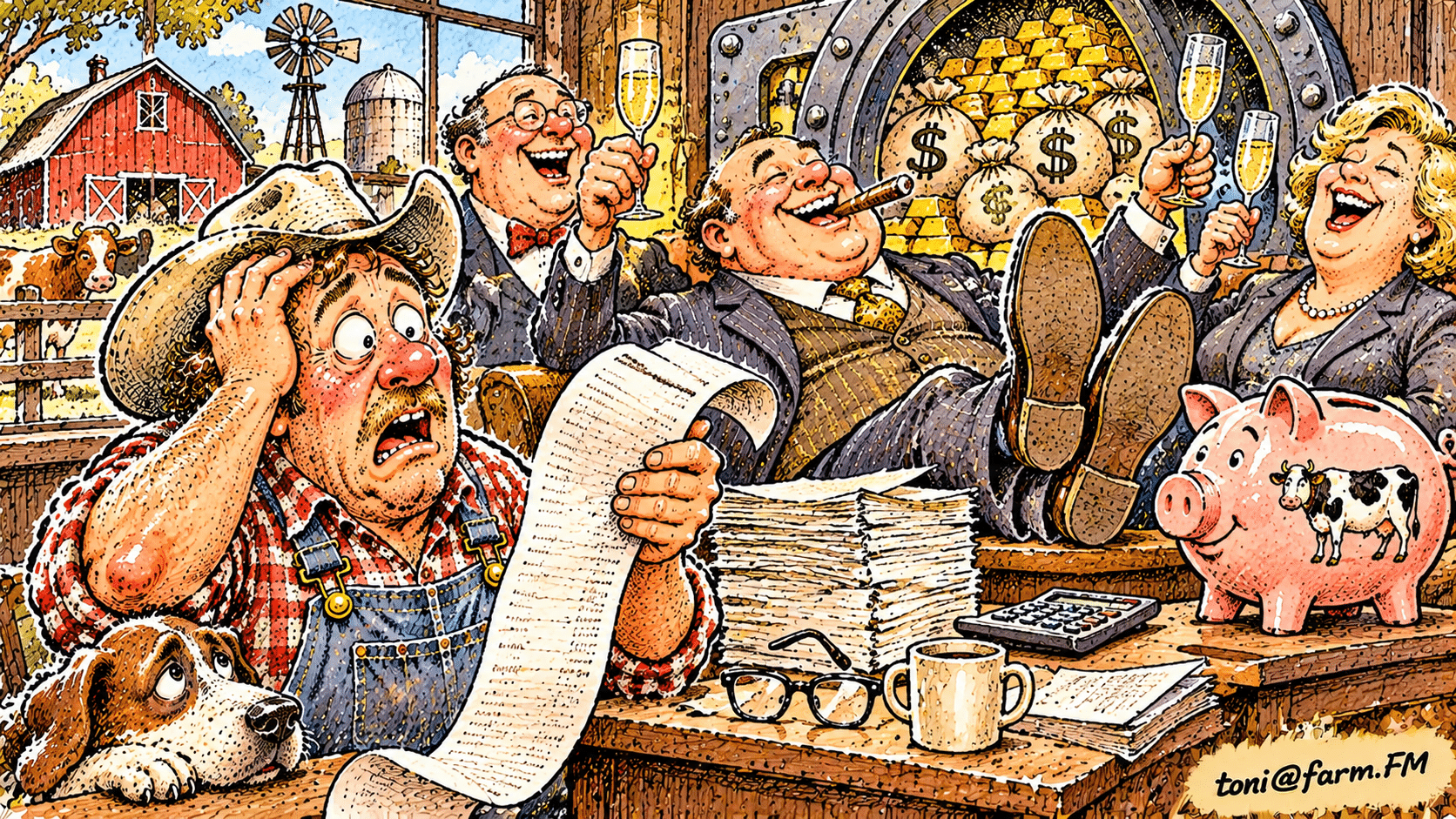
What does a debt cliff headline actually describe?
The $605 billion figure in the headline is the sector-wide total as reported, and it should be checked against the official source before anyone quotes it. The USDA Economic Research Service publishes farm balance sheet and income forecasts, and that is the place to confirm what was actually measured and over what period.
A cliff is a metaphor. It suggests a sudden drop, but most farm debt problems arrive slowly: a refinanced note here, a larger operating line there, a machinery payment that quietly became permanent. Reading the headline well means asking whether the pressure is spreading evenly or piling up in certain kinds of operations.
Why can borrowing outpace equity?
Equity grows when land values rise, when retained earnings pile up, or when the family pays down notes. Debt grows when a year loses money, when input bills rise faster than checks, or when new ground and equipment are financed. If the second list is bigger than the first for a few seasons, borrowing runs ahead of equity.
Land can muddy the picture. Paper equity may look healthy because acres hold their value, while cash is thin. A producer in northwest Oklahoma wheat country can be asset rich on a statement and still short on working capital in June. Those are different problems with different fixes.
How do lenders read the balance sheet?
Lenders do not look at one number. They look at liquidity, solvency and repayment ability together, and they compare your figures to what is normal for your type of operation. Ask your lender which ratios they weigh most so you can watch the same ones.
For a neutral overview of how the Farm Credit System approaches lending and oversight, the Farm Credit Administration is a good starting point, and Farm Credit associations publish their own application checklists. The ranching side of the same money question gets a fair hearing in the ranch economics stories.
- Working capital: can current assets cover current bills?
- Debt-to-asset: how much of what you own is borrowed against?
- Repayment capacity: does a normal year cover principal, interest and family living?
What does this look like for Enid and northwest Oklahoma?
Row crop and cattle operations in the region carry different risks. Wheat and grain sorghum farmers feel input costs and basis. Cow-calf operators feel feed, hay and replacement prices. Both lean on operating credit, so a rise in borrowing cost or a tighter lender stance reaches them fast.
Regional data helps. The Kansas City Fed agricultural credit surveys track credit conditions across this part of the country, and OSU Extension economists often explain the local version in plain language.
What is the other side of the argument?
Not everyone sees a cliff. Some analysts argue that sector debt began from a strong position, that much of the borrowing financed productive assets, and that balance sheets across the country entered this period with room to absorb stress. Averages can also hide strong operators who borrowed carefully.
Critics of that view respond that averages are exactly the problem: the farms in trouble are not average, and a thin-margin year hits them first. Both points can be true at once. Check the data yourself and compare it with your own numbers, using sources like FRED economic data for interest rates.
What should you do before the next renewal?
Do your homework early. A lender who sees a clear plan in the fall is easier to work with than one who sees a surprise in March. If the numbers look tight, ask about restructuring options and about programs from FSA farm loans that sit alongside commercial credit. Over at farm.FM there is plenty of reading on the farm economics side if you want the wider picture, including a farm.FM story on debt and equity.
General education only, not financial advice. A licensed ag lender or an accountant who knows farm returns can look at your actual statements. You can also browse the money basics at this farm money guide and the rural resources at a rural farm help site.
- Update your balance sheet at market values and at cost.
- Build a monthly cash flow, not just an annual one.
- List every note, rate, term and maturity on one page.
Sources and further reading
- USDA Economic Research Service: farm economy data and analysis
- Farm Credit Administration: regulator of the Farm Credit System
- Farm Credit: cooperative agricultural lending network
- Kansas City Fed Agriculture: farm credit and land value surveys
- FSA Farm Loans: FSA direct, guaranteed, microloan and emergency loan information
- OSU Extension: Oklahoma State extension
Ask locally: Ask your local ag lender or a Farm Credit association loan officer in Enid, and check with an OSU Extension ag economist for regional context.