A Farmer’s Guide to the 2026 Election: What’s Actually at Stake
Every election season farmers hear that their vote matters more than ever. This guide skips the pitch and lists the farm issues that tend to come up, who argues what about them, and where to read the facts for yourself.
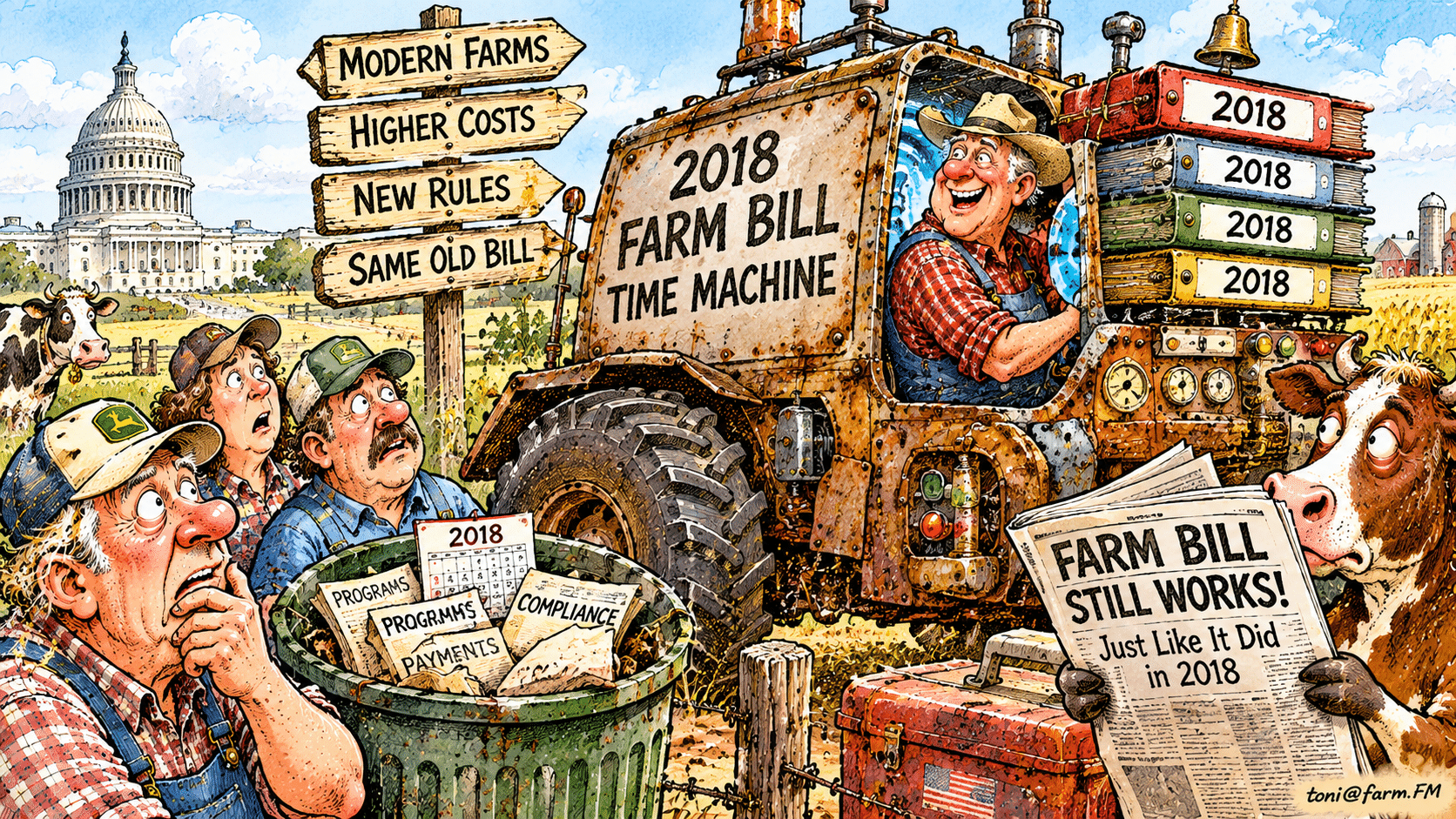
Which farm issues tend to be at stake?
Elections rarely turn on farm policy, but they shape who writes it. The recurring issues include the farm bill and the safety net, trade and tariffs, crop insurance, farm credit, input costs, water and land use, rural broadband and health care, and immigration and labor rules. Each of them reaches the farm gate in some form.
This page does not tell you how to vote or who to vote for. It offers a map of the questions, and it points you to official sources so you can compare what candidates say to what the programs actually do.
What is the farm bill, and why does it keep coming up?
The farm bill is the large package that sets up commodity programs, crop insurance, conservation, nutrition and rural development. It runs in multi-year cycles and often gets extended while Congress argues. You can follow the text, committee action and status at Congress.gov.
The House Agriculture Committee and the Senate Agriculture Committee are where most of the work happens. Check their pages for current hearings and markups, and confirm any dates directly with them.
What do supporters of different approaches argue?
Supporters of stronger federal farm programs argue that weather, trade shocks and price swings are bigger than any single farm can absorb, and that stable support keeps food production and rural towns going. Supporters of smaller programs argue that heavy support encourages larger farms, raises land costs and distorts planting decisions.
Some emphasize trade as the answer, others emphasize domestic demand, and others focus on credit and costs. Each camp has analysts and farm groups behind it. The Congressional Budget Office publishes cost estimates, and GAO reviews how programs are working.
What are the strongest counter-arguments, and what is disputed?
Facts that remain disputed include how much of farm support goes to which size of operation, how far programs raise rents and land prices, how much tariffs help or hurt different crops, and how much deregulation lowers costs. Reputable researchers land in different places, partly because the answers depend on the years and crops studied.
A good habit is to ask of any claim: what is the source, what period does it cover, and who funded it? The USDA Economic Research Service and farmdoc daily are good places to read analysis that shows its work.
What does this look like from northern Oklahoma?
Around Enid, wheat, cattle, energy and feed all feed local payrolls. A farm bill that changes reference prices, crop insurance subsidies or conservation rules lands in the same neighborhood as a trade dispute that moves wheat export demand. Water rules, rural hospitals and broadband gaps matter as much to families here as commodity programs do, so a good read of the issues includes the whole community and not just the field.
The Oklahoma Farm Bureau and the Oklahoma Department of Agriculture, Food and Forestry post information on state and federal issues. Check the state election board and Oklahoma.gov for current voting deadlines and requirements, since this page does not state them.
How do you read campaign claims about farming?
Ignore the adjectives. Look for specific proposals with numbers behind them, and then find the program or the bill itself. A claim that a program has failed or succeeded should point to a measure like income, enrollment or payments, not a mood.
The money side of the farm is discussed at this farm money guide, and the community side at a rural farm guide. Compare them against your own books before you decide which issues matter most to your operation.
Where can you keep learning?
Follow committee pages, read one nonpartisan analysis per issue and talk with neighbors who disagree with you. Over at farm.FM the farm news section and the agribusiness section keep a steady eye on farm policy, and a farm.FM piece on the farm bill is a good companion read.
Stay curious, stay skeptical and stay local. Policy matters most when it is applied to a real farm, which is where you come in. Write down the two or three questions that matter most to your own operation, and use them to read every claim you hear from now until the votes are counted.
Sources and further reading
- Congress.gov: bills and legislative status
- House Agriculture Committee: farm bill and ag policy in the House
- Senate Agriculture Committee: farm bill and ag policy in the Senate
- Congressional Budget Office: cost estimates for federal programs
- GAO: government watchdog reports
- USDA Economic Research Service: farm economy data and analysis
Ask locally: Ask your local Farm Bureau or county extension office where to find nonpartisan summaries of the farm issues you care about.