The Two-Tiered Farm Economy: Why Some Grow While Most Struggle
Some farms keep expanding while many hang on by their fingernails. Here is what a two-tiered farm economy means, what the data say and what smaller operations can try.
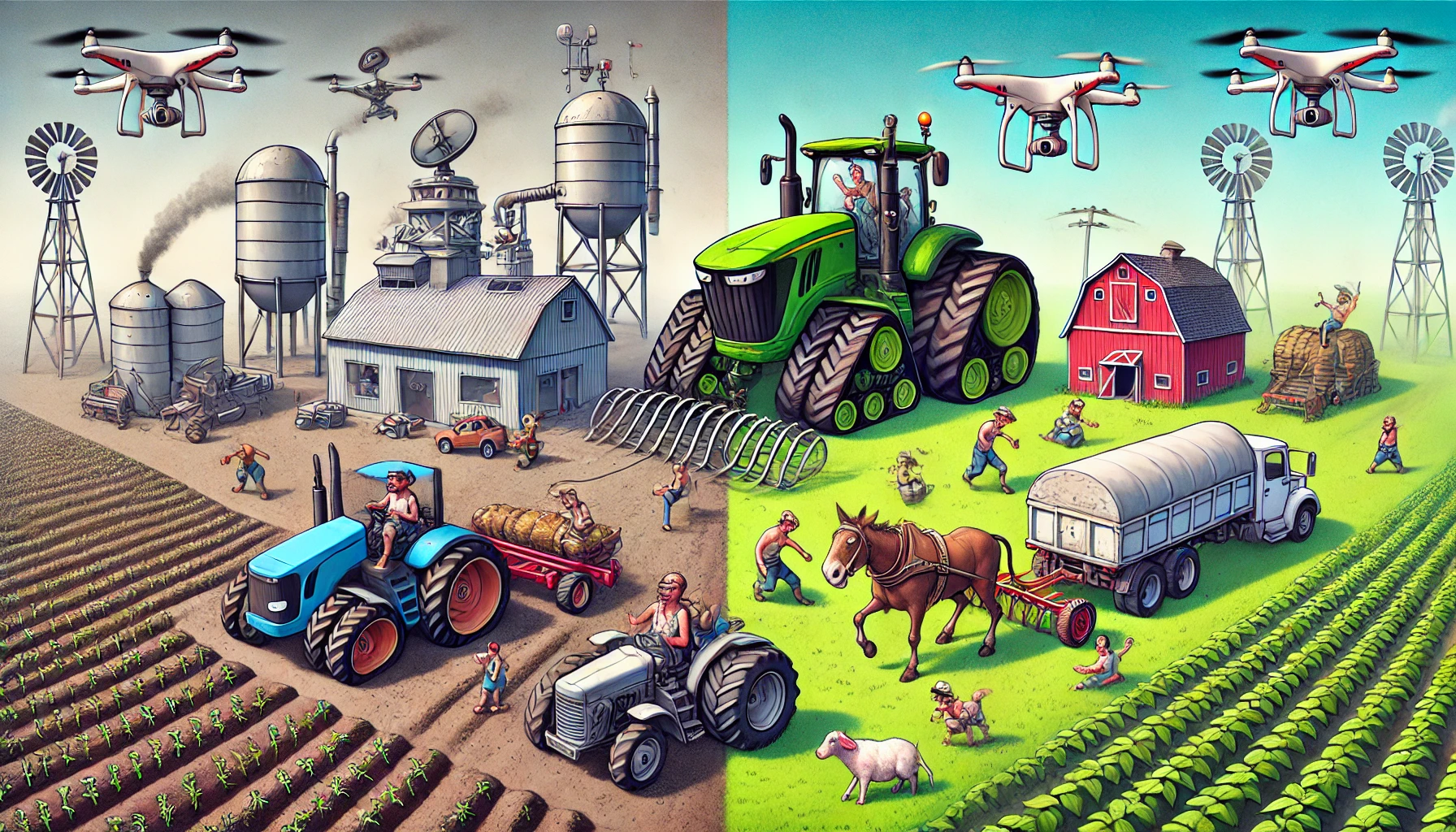
What is a two-tiered farm economy?
It describes a farm sector split into a group of larger, well-capitalized operations that grow and a larger group of smaller or mid-size farms that struggle for margin. The title makes the strong claim that most struggle. Whether that holds depends on how you define struggle, and the data should be checked at the source.
Production, income and land ownership are not spread evenly. The Census of Agriculture and USDA Economic Research Service publish figures on farm size, sales and income, and USDA NASS releases regular surveys.
The difference also shows in household finances. A large operation may be a full-time business with employees, while a small one is often a family that also holds a town job, which changes how each views risk, debt and growth.
Why do larger farms have an edge?
Scale can bring lower cost per unit, better terms on inputs, easier access to credit, specialized staff and more ability to absorb a bad year. Large operations may also be able to manage marketing and risk with more tools.
Smaller operations face the same prices with fewer advantages. In Oklahoma, a family wheat and cattle outfit near Enid competes for land rent and inputs with much larger neighbors, and often takes off-farm work to keep the household going.
Access to land is a big part of it. When land comes up for rent or sale, the bidder with the most capital and the most equipment often wins, which can lock smaller neighbors out of expansion.
What do the numbers show, and what is disputed?
Many small farms rely heavily on off-farm income, while a smaller number of large farms produce most of the sales. That much is widely reported. What is disputed is the meaning: some call it efficient specialization, others call it a threat to rural communities.
Read the data at the sources above, and also look at regional analysis from the Kansas City Fed and farmdoc daily. A single average can hide a lot.
Be careful with any claim that gives exact shares without naming a year and a source.
Look also at what counts as a farm in the data. Definitions include small places with little production, which can pull averages down, so read the notes before quoting any figure.
What do supporters of consolidation say?
Supporters argue that larger farms feed more people at lower cost, that growth reflects farmers adopting better technology and management and that consumers benefit. They note that farms of all sizes can succeed with good management and that exit from farming is a normal part of any industry.
Critics respond that policy and lending favor the biggest, that rural towns lose schools and businesses when farms consolidate and that diversity of operations adds resilience. Both arguments have merit.
A fair reading of this debate keeps two things in mind: scale is real, and so is the value of many farms spread across many communities. Policy choices decide which one gets help.
What can smaller farms do?
Options include cutting cost of production, finding niche or direct markets, adding value through processing, joining cooperatives for purchasing and marketing, leasing smartly and blending off-farm income. Each has trade-offs, and none works everywhere.
OSU Extension offers small farm programs, the small farm guide gathers ideas and the farm money guide covers budgeting. Compare lenders, including Farm Credit and local banks, and talk to a licensed professional before big commitments.
Online groups and local co-ops also help smaller farms share equipment and information. A cooperative can give a small producer some of the buying power a big one has.
What is the takeaway?
The sector's average hides a wide spread. Your own numbers matter more than headlines, so build a break-even and know where you stand. At farm.FM you can read agribusiness and farming stories, and one farm.FM story on small farm struggles fits well here.
This is general education, not financial advice.
Spend an evening with last year's records and sort expenses by enterprise. Knowing which part of the operation makes money and which only breaks even is the quickest way to choose where to grow and where to cut.
Sources and further reading
- Census of Agriculture: USDA census of farms
- USDA Economic Research Service: farm economy data and analysis
- USDA NASS: agricultural statistics and surveys
- Kansas City Fed Agriculture: farm credit and land value surveys
- farmdoc daily: University of Illinois farm economics
- OSU Extension: Oklahoma State extension
Ask locally: Ask your county extension office, a Farm Credit or bank lender, or a farm business consultant.