Why Farmers Feel Like Political Pawns in an Election-Year Giveaway
Farm aid timed near an election invites suspicion. Here is how to evaluate any aid package on its merits, whichever party announces it.
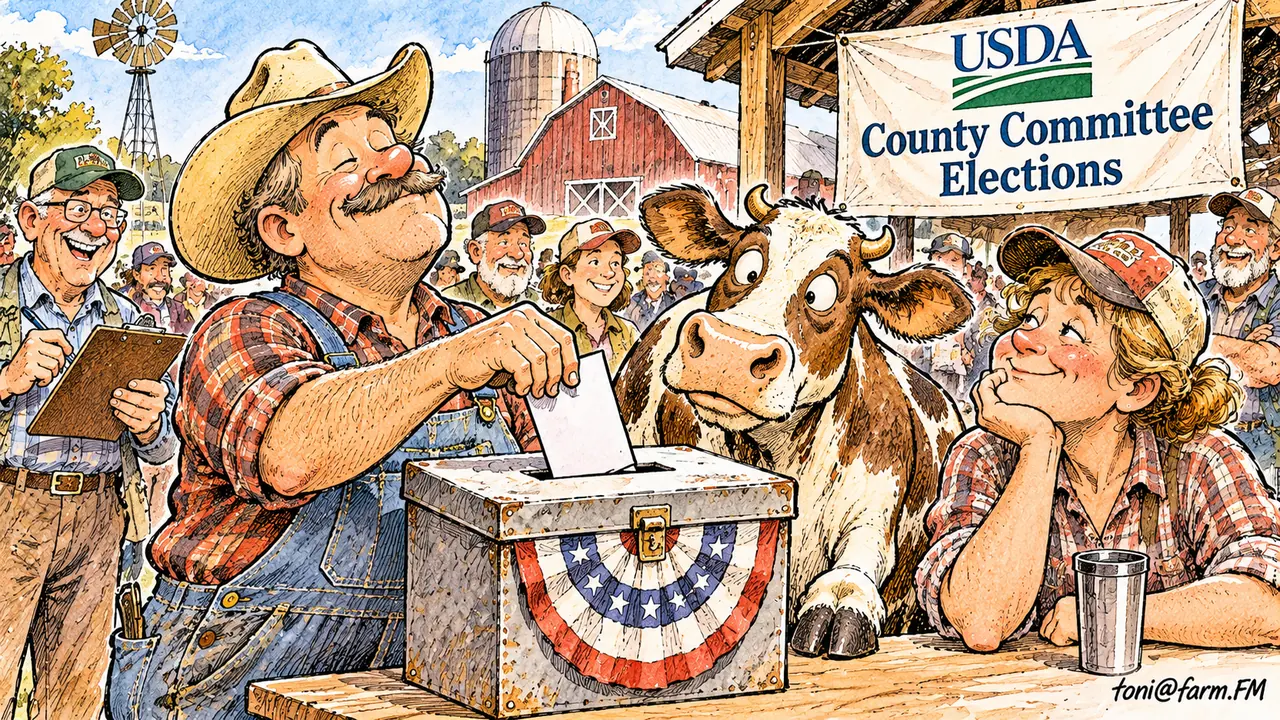
What does the pawn complaint mean?
The complaint is that farm aid sometimes appears or grows near elections and is treated as a vote-getting tool rather than a policy designed for farm needs. This article does not accuse any person or party of anything, and it will not tell you how to vote. It explains how to judge aid on its own terms.
Supporters of the complaint say producers want durable rules and fair prices, not announcements. They argue that aid tied to a calendar leaves families guessing whether help will come again.
It is also fair to say that farm voters are not one group. Producers of different crops, sizes and regions have different views on aid, and many say they would rather earn a fair price than receive a payment. Hearing that range keeps the conversation honest.
What do defenders of the aid say?
Defenders respond that aid goes where there is real need, that disasters and price drops do not follow a political calendar and that help delivered quickly is better than help delayed to avoid looking political. They note that farmers can use the cash.
They also say that every administration and Congress has used aid at various times, so the pattern is not unique to one side. A fair reader should look at the program, not the timing alone.
Some point out that a payment delivered close to an election is not necessarily a bad payment, and that the reverse can be true: a good program held up for political reasons costs farmers too. The test is the program itself, not the date on the press release.
How should you evaluate any aid package?
Ask five questions: who is eligible, how much does it pay, how is it calculated, when does it arrive and is it one-time or repeating? Read the rules at the official page and ask your FSA office. Farmers.gov and the Farm Service Agency are the places to start.
Then ask how the money fits your plan. One-time aid is best used for debts, repairs or reserves rather than for ongoing costs that will return next year.
Keep copies of everything you submit and every notice you receive. If a payment is calculated differently than you expected, a paper trail makes it easier to ask questions. The small farm information site offers recordkeeping basics that fit smaller operations.
- Who is eligible and what are the payment limits?
- How is the payment calculated?
- When does the money arrive?
- Is it one-time or a repeating program?
What do the budget watchers say?
The Congressional Budget Office and the GAO publish cost estimates and reviews of programs, and Congress.gov lets you read the text. Neutral analysis like this helps you separate the politics from the policy.
Economists also debate whether aid is distributed fairly. Payments tied to acres or production can favor larger operations, while targeted help can be more complicated to administer. These are reasonable arguments on both sides.
Look at the details beneath the headline total. A large program that spreads thinly over many producers may mean little per farm, while a smaller targeted one may mean a lot to the families it reaches. Per-acre or per-head payment rates are the numbers to find.
How does it feel in Enid and northwest Oklahoma?
Producers here have seen aid come in various forms for wheat, cattle and other enterprises. Many say the paperwork, the uncertainty and the sense of being talked about rather than asked are what bother them most.
If you want to be heard, talk to your delegation, your county Farm Bureau and your commodity group. The Oklahoma Farm Bureau and National Farmers Union both gather member views.
Local newspapers, farm radio and extension newsletters often summarize new programs in plain language. Cross-check them with the agency's own notice before acting, because summaries can miss a deadline or a limit.
A little humor, and where to read more
Anyone who has opened a thick envelope of program rules knows why the satirists enjoy this subject. Over at farm.FM, the farm satire desk takes aim at it, and a farm.FM story on election year farm aid is good for a smile.
For the plain facts, the farm money guide covers budgeting around aid and the agribusiness section on farm.FM tracks the economics. Check current terms at the official source.
Sources and further reading
- Farmers.gov: USDA one-stop site for producers
- USDA Farm Service Agency: FSA farm programs and loans
- Congressional Budget Office: cost estimates for federal programs
- GAO: government watchdog reports
- Congress.gov: bills and legislative status
- Oklahoma Farm Bureau: state farm organization
Ask locally: Ask your county FSA office, your Farm Bureau county office or your lender to explain how any aid fits your operation.