“A Shell of a Farm Bill”: The Partisan Gridlock Frustrating Producers
A shell of a farm bill sounds like a bill with the middle missing. Here is what that could mean, what each side says and how to follow it yourself.
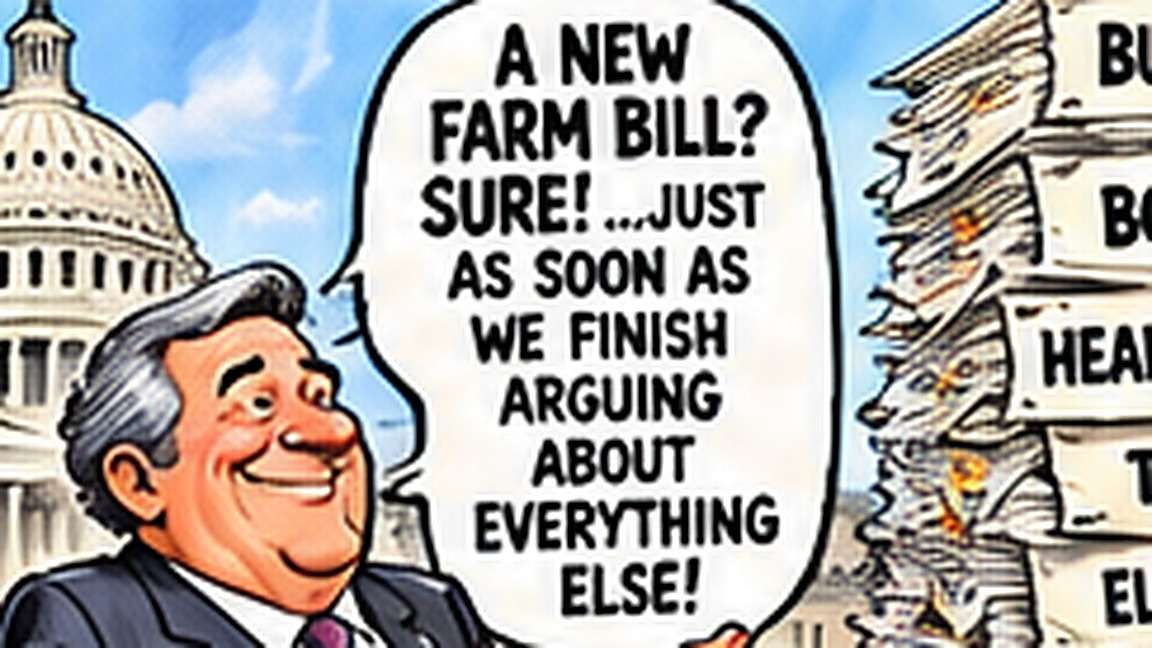
What does a shell of a farm bill mean?
The phrase suggests a bill that keeps the name and some basics but drops major provisions. What any particular bill contains is a matter of text, and you should read it at Congress.gov instead of relying on a description.
Farm bills combine commodity, insurance, conservation, nutrition and trade pieces. A stripped-down version might pass the parts with broad support and leave the contested parts for later. Whether that is progress or a shortcut depends on whom you ask.
Another way to look at it is as a scaffold. A bill that covers the core programs gives producers a baseline to plan around, while leaving room to build on it. Whether it becomes that scaffold or stays a shell depends on what follows.
Why does gridlock slow the bill?
Farm bills have historically passed with coalitions that cross party lines, trading support between farm and nutrition programs. When the parties disagree about spending levels, program design or what belongs in the bill, the coalition is harder to build.
The House Agriculture Committee and Senate Agriculture Committee publish drafts, markups and hearing records, so you can see where the disagreements actually sit. The Congressional Budget Office estimates what each version would cost.
Election calendars matter too. Members have limited floor time, and the closer a deadline or a vote on something else comes, the harder it is to schedule a full farm bill debate. Time pressure turns disagreements into delays.
What do supporters of a narrow bill say?
Supporters of passing a narrower bill argue that producers need something now, that perfect should not block good and that remaining issues can be dealt with in later legislation. They say a smaller bill that passes beats a larger one that stalls.
They also argue that some disputes are about matters outside farm policy, and that separating them lets agriculture move forward. For farmers deciding on loans and inputs, certainty has real value.
Another point made by supporters is that farm programs rarely stay frozen anyway, because agencies adjust rules within what the law allows. A smaller bill can still leave room for agencies to work.
What do critics say?
Critics respond that a hollowed-out bill leaves out the tools producers asked for, such as updated reference prices or conservation funding, and that passing a thin bill reduces pressure to finish the job. They worry that deferred items never come back.
There is also a fairness worry: when only the easiest items pass, the producers who needed the harder ones get left behind. Reasonable people can weigh that tradeoff differently.
A third group says the real problem is process, not content: long delays, repeated extensions and late-night packages make it hard for anyone to read what they are voting on. Better process, they argue, would produce better farm policy whichever party leads.
What does it mean for Enid and northwest Oklahoma producers?
Wheat and cattle producers depend on commodity programs, crop insurance and conservation cost-share, all shaped by the farm bill. Check the ARC and PLC pages and NRCS for current program rules, and ask your county FSA office what is in effect.
Staying informed through the Oklahoma Farm Bureau and the rural farm site helps you notice changes early.
Your lender can help with planning. Ask how they underwrite expected program payments and whether they would adjust if rules change. A lender who understands the program calendar can be a real ally, and the farm money basics site explains what to bring.
How to follow the process
Follow primary sources, set a reminder to check them, and treat any claim of a done deal as unconfirmed until there is a vote. Contact your delegation with specific concerns.
On farm.FM, the farm news and satire desk and the agribusiness section track the saga, and a farm.FM story on the farm bill gridlock adds some humor. Check all current program terms at the official page.
Finally, keep perspective. Farm policy moves slowly, and the producers who do best tend to be those who plan around what is in effect today, build cushions and keep their records clean. That advice holds under any bill.
Sources and further reading
- Congress.gov: bills and legislative status
- House Agriculture Committee: farm bill and ag policy in the House
- Senate Agriculture Committee: farm bill and ag policy in the Senate
- Congressional Budget Office: cost estimates for federal programs
- ARC and PLC: FSA commodity safety-net programs
- USDA NRCS: conservation programs and technical help
Ask locally: Ask your county FSA office, NRCS field office or Oklahoma Farm Bureau staff about current program rules.