The Real Meaning of “Farm Income” When Your Equity Is Shrinking
A farm can report a decent income and still end the year poorer. That sounds like a contradiction, but it is what happens when income and equity measure different things and move in different directions.
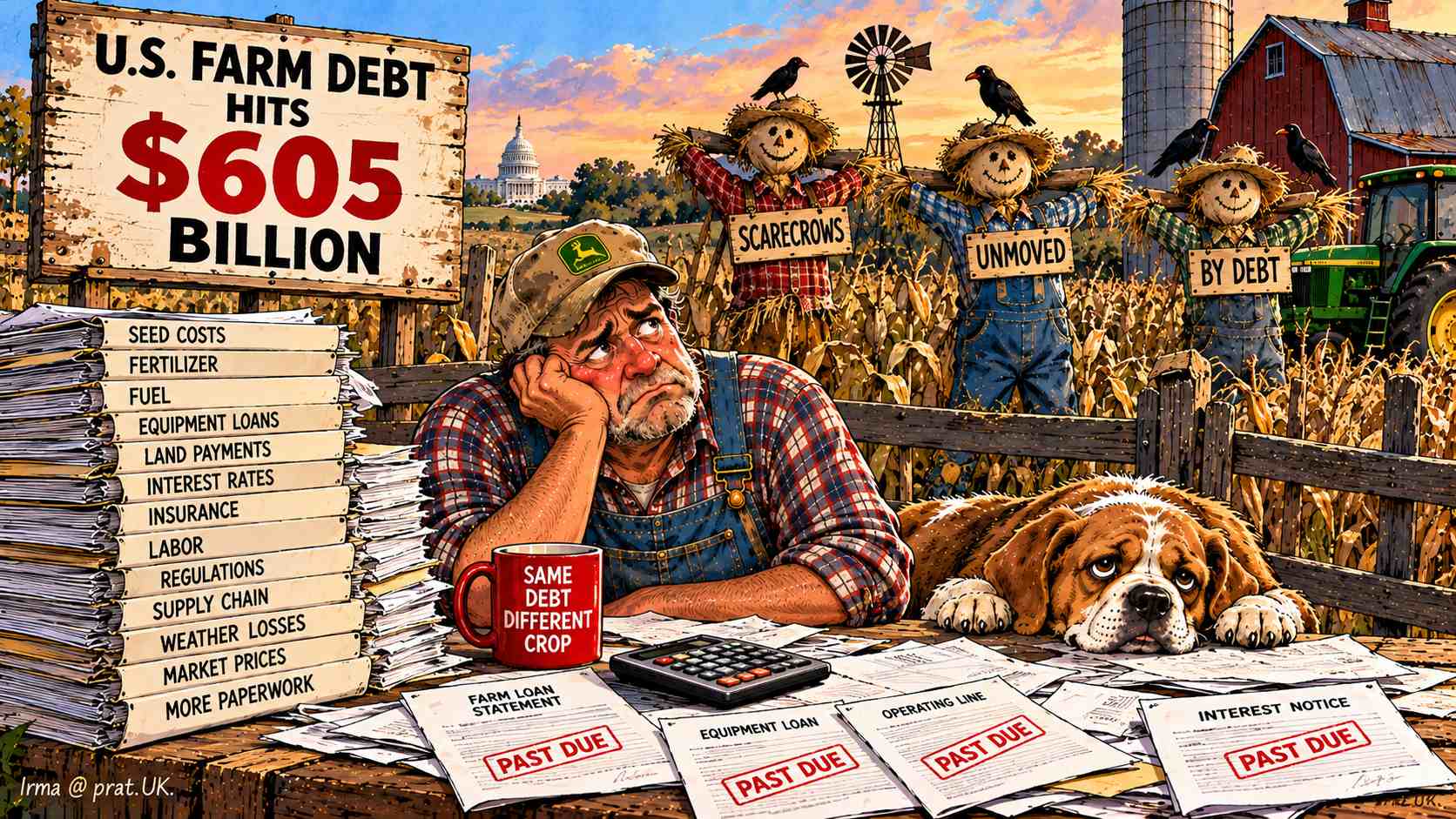
What is the difference between income and equity?
Income is what the operation earns over a period after expenses. Equity is what is left of the farm's value after subtracting debts. You can earn income and still lose equity if land values fall, equipment loses value, livestock prices drop or you borrow more than you earn.
The USDA Economic Research Service publishes national farm income forecasts and balance sheet data. Read them for context, and remember a national average does not describe any one operation.
Why can income look fine while equity slips?
Government payments, one-time aid and insurance indemnities can lift reported income without fixing the underlying margin. Higher costs can eat the gains. Debt can grow to cover operating gaps, and rising interest costs can slow things further. At the same time, asset values can slide.
Federal programs matter here. The USDA Farm Service Agency and RMA administer programs that can show up as income. Ask how much of your income came from the market and how much came from program payments.
- Program payments and one-time aid
- Insurance payments after a loss
- Borrowing to cover operating costs
- Falling land or livestock values
- Equipment that loses value faster than it is paid off
What numbers should a producer track?
Track at least four things: net farm income, cash flow, working capital and net worth. Add debt-to-asset and the ability to cover payments. Compare year to year, not just to neighbors. A neighbor's tax return tells you almost nothing about his debts, his rent or his family situation, so use your own history as the benchmark. A balance sheet at the start and end of each year tells you whether the farm is gaining or losing ground.
The basics are explained in plain language at this farm money guide, and your tax preparer and lender can help set up the statements. This is general education, not financial or tax advice.
What does Washington mean by farm income?
When policy debates cite farm income, they usually mean national aggregates, which can include government payments and can mask the spread between operations. Supporters of current programs argue that income measures show a sector that is doing fine, while critics argue they hide stress among mid-sized and beginning farms.
Which view is right depends on the measure and the year. Ask who is being averaged, whether payments are counted, and whether the figure is adjusted for inflation, since each choice changes the story. Read analysis from farmdoc daily, the Congressional Budget Office and GAO, and note what each includes and excludes.
How does this play out in Oklahoma?
Northern Oklahoma producers deal with price swings in wheat and cattle, and land values that can move with energy and development. A farm near Enid might hold land that has gained on paper while operating income thinned out, which makes equity look better than cash flow feels. The reverse can also happen. In a drought year, income can collapse while the land itself holds its value, and the farm looks worse on the income statement than it does on the balance sheet.
The Kansas City Fed publishes farm credit and land value surveys for the region. Check the latest release. Your lender and OSU Extension can help you read the local picture, and this rural farm guide covers how land and community trends fit together.
What should you do with this information?
Use your balance sheet, not just your tax return, to judge how you are doing. If equity is slipping, ask why. Is it prices, costs, debt or asset values? The answer decides the action: cut costs, restructure debt, adjust marketing or rethink scale. If it is asset values, the action may be patience, while if it is costs or debt, waiting usually makes the problem larger, and an honest conversation with your lender is the place to begin.
Talk to your lender before a problem becomes a crisis. Farm Credit associations and FSA farm loans may be options to compare, with current terms checked directly.
Where can you keep reading?
Over at farm.FM the agribusiness section covers the farm economy, and a farm.FM piece on farm income and net worth is a helpful companion. The farm news section also tracks policy changes.
Remember, an income number is a snapshot of a year. Equity is the story of a lifetime, and the second one decides whether the farm is still there for the next generation.
Sources and further reading
- USDA Economic Research Service: farm economy data and analysis
- USDA Farm Service Agency: FSA farm programs and loans
- USDA Risk Management Agency: crop insurance
- Congressional Budget Office: cost estimates for federal programs
- GAO: government watchdog reports
- Kansas City Fed Agriculture: farm credit and land value surveys
Ask locally: Ask your lender and tax preparer to help you build a yearly balance sheet alongside your income statement.