Congressional Inaction: Why Farmers Are Still Waiting for a Five-Year Farm Bill
Farm bills set rules that producers plan around for years. When the process stalls, the effects show up in loan officers' offices long before they show up in news stories.
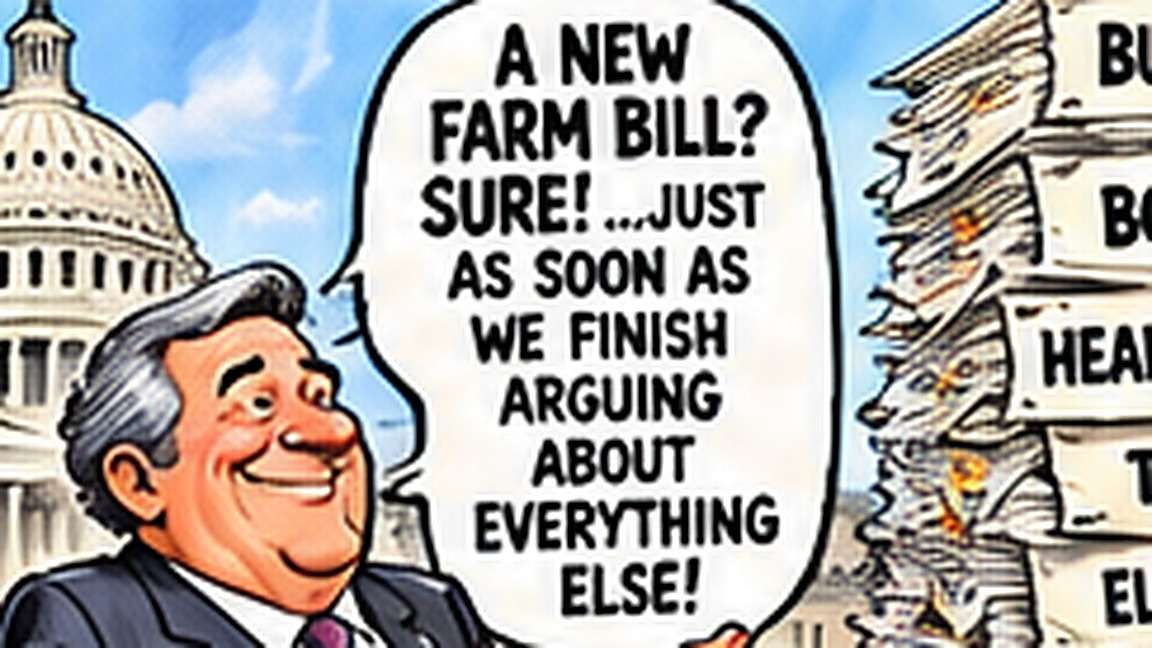
What is a five-year farm bill, and why does the timing matter?
A farm bill is a large package of federal law covering commodity programs, crop insurance, conservation, nutrition assistance, trade and rural development. It is written to run for several years so that producers and lenders can plan around stable rules. The headline claims farmers are still waiting, and the current status should be confirmed on Congress.gov rather than from memory.
Timing matters because farm decisions are made well ahead of harvest. Seed, fertilizer, rental ground and equipment get committed months before anyone knows what a program will pay.
The farm bill also carries conservation and nutrition titles, which is why it draws attention from outside agriculture. That breadth can help build a coalition, but it also gives more places for a disagreement to stall the whole package.
What happens when the bill is late?
Existing programs are often extended in short pieces, which keeps the lights on but leaves new ideas waiting. Extensions can carry forward old payment formulas, and they leave open questions about reference prices, payment limits and conservation enrollment.
For a lender, uncertainty raises risk. Ask your loan officer how they treat expected program payments when they underwrite your operating loan. The ARC and PLC pages explain the commodity programs, and USDA RMA covers crop insurance rules that you should confirm each year.
- Check which programs are currently in effect.
- Confirm payment limits and sign-up dates at the official page.
- Ask your lender how pending changes affect your plan.
Why do supporters say Congress is failing farmers?
Supporters of that view argue that a missed deadline is a failure of basic duty, and that producers are the ones who pay for it. They say temporary measures cannot replace a durable framework, and that families who carry the biggest risk deserve certainty.
They also point out that every year of delay pushes back improvements to reference prices, disaster programs and conservation options that growers have asked for. In wheat country around Enid, price risk and weather risk both make that certainty especially valuable.
Another reason to care is local. Oklahoma producers in the Panhandle and the wheat belt often rely on commodity and insurance rules that were set in a prior bill. Any change to reference prices or payment limits can change which program pays better for your crop mix, so reading the new rules carefully matters when the day comes.
What do critics and Congress members say?
Critics of the all-blame approach respond that the farm bill is large and contains heavy disagreements, especially over nutrition spending, budget limits and how much to raise commodity support. A bill that pleases farm-state members can still fail over issues that have little to do with farming.
The Congressional Budget Office publishes cost estimates that shape what can pass, and the House and Senate agriculture committees post drafts and hearing records so you can read the arguments yourself.
It is worth saying that both sides are describing the same calendar. Members who defend the delay often argue that a bad bill passed quickly is worse than a good bill passed late. Farmers who wait respond that the cost of waiting is real and is paid in interest, not in speeches.
How should you plan while you wait?
Plan around programs that are in effect today and treat any pending change as upside or downside, not as a certainty. Build budgets with conservative price and payment assumptions, and review crop insurance before the sales closing date.
Keep an eye on state resources too. The Oklahoma Department of Agriculture, Food and Forestry and Oklahoma Farm Bureau publish updates and member alerts, and this farm money guide covers planning basics.
If you rent land, talk with your landlord about how lease terms might interact with program changes. A clear conversation now prevents a hard one later, and it helps both sides plan for the next crop year with the same assumptions.
Where to follow the story
Follow the process through primary sources: bill text, committee schedules, cost estimates and agency notices. Be skeptical of any claim that a deal is done until a vote has actually happened. Rumor travels faster than legislation.
On farm.FM, the farm news desk and the agribusiness section often poke at the delay, and a farm.FM story about the farm bill delay is a reminder to keep your sense of humor. For practical rural resources, see the rural farm guide.
A good habit is to set a monthly reminder to check official sources. Ten minutes on a committee page, an agency notice or a state farm organization update will keep you ahead of most of the chatter.
Sources and further reading
- Congress.gov: bills and legislative status
- ARC and PLC: FSA commodity safety-net programs
- USDA Risk Management Agency: crop insurance
- Congressional Budget Office: cost estimates for federal programs
- House Agriculture Committee: farm bill and ag policy in the House
- Senate Agriculture Committee: farm bill and ag policy in the Senate
Ask locally: Ask your FSA county office, crop insurance agent or Oklahoma Farm Bureau staff how pending farm bill changes may affect your plan.