Why the “Farm Safety Net” Needs a Complete Rethink
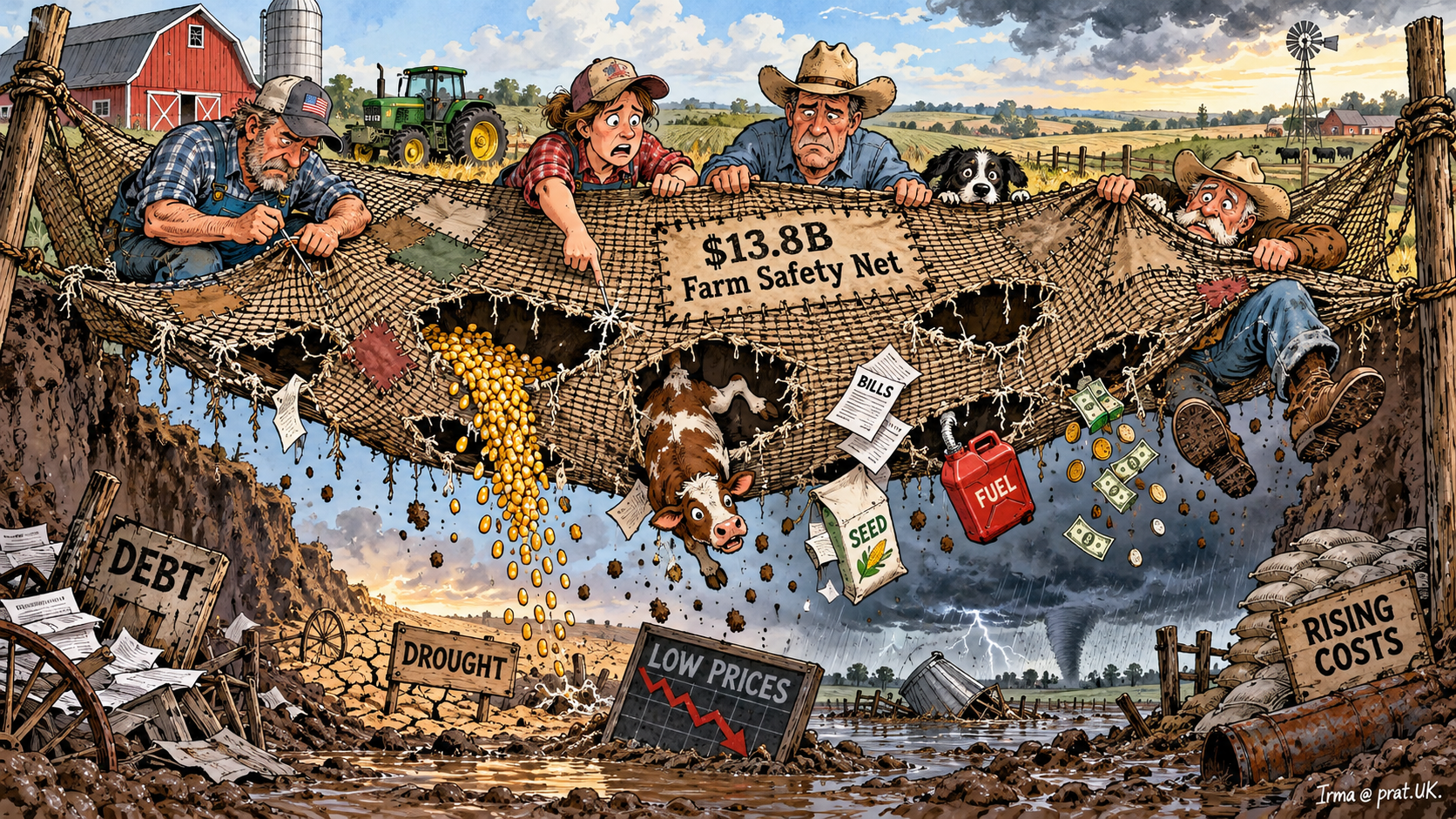
The farm safety net has been patched for decades, and every patch comes with its own rules. A growing number of producers and analysts argue that it is time to redesign the whole thing. Others say the patchwork works well enough. Both sides deserve a hearing.
What is the safety net today?
The federal safety net is a set of programs: crop insurance through USDA RMA, price and revenue programs through ARC and PLC, disaster and emergency aid, marketing loans, conservation programs and credit through FSA. Each has its own rules, payment limits and deadlines, and Congress changes them in farm bills and in emergency packages.
Which programs matter to you depends on what you raise and where. Check current details at Farmers.gov or your county FSA office.
Why do some say it needs a complete rethink?
Reformers argue that the system grew by accident, with new programs stacked on old ones. They say it is too complicated, tilted toward the largest operations, slow to respond to disasters and often disconnected from the real risks farmers face. They point to ad hoc aid as proof the formal system falls short.
Some of them want simpler, more automatic support. Others want more focus on beginning and mid-sized farms, or a greater role for risk management tools. Their ideas differ, but the dissatisfaction is shared.
- Too many overlapping programs with different rules
- Payment limits and formulas that favor scale
- Slow or uncertain disaster aid
- Gaps for beginning farmers and diversified operations
- Dependence on emergency aid passed year by year
What do defenders of the current system say?
Defenders argue that the programs have kept farms in business through bad years, that crop insurance in particular has become a widely used tool, and that a major redesign could create new gaps and uncertainty. They note that bipartisan farm bill compromises are hard to reach and that incremental fixes are more realistic.
They also warn that bigger changes could shift costs or risks onto farmers in ways that are hard to predict. The Congressional Budget Office publishes cost estimates, and GAO reviews program performance.
What facts are disputed?
Disputed points include how much support goes to which size of farm, how far payments raise land values and rents, whether crop insurance is priced fairly and how well programs match actual losses. Different studies reach different answers, partly because the answers depend on which years and crops are studied.
The USDA ERS and farmdoc daily publish research that shows its work. Before sharing a statistic, check what it measures and who paid for the study.
What would a redesign need to answer?
Any redesign has to answer several questions. Who is the program for? What risks should the public cover, and which should farmers carry? How much will it cost and who pays? How do you keep it simple without leaving people out? How do you pay quickly after a disaster without inviting abuse?
Those are hard questions, and good-faith people answer them differently. The House Agriculture Committee and the Senate Agriculture Committee are where the work takes place.
What does this mean for a farm near Enid?
A wheat and cattle producer in northern Oklahoma deals with drought, hail, price swings and input costs, and may use crop insurance, FSA programs and sometimes disaster aid in the same year. Anything that simplifies sign-up or speeds payment would be felt right away, and so would anything that cuts coverage. A hailstorm in May or a dry fall can change the whole year, which is why speed and predictability matter as much as the size of any payment.
Until reform happens, plan around what exists. This farm money guide covers budgeting for risk, a small farm guide covers diversifying, and Oklahoma Farm Bureau follows policy proposals that could affect members.
How do you get involved?
Join a farm group, comment on proposed rules, talk to lawmakers and share specific stories of how programs work or fail on your place. Specific examples carry more weight than general anger. A short note that says what you raise, what the rules required and what it cost you in dollars and days is the kind of detail a committee staffer can actually use.
Over at farm.FM the agribusiness section follows farm policy, and a farm.FM story on farm safety net reform has more. The satire page will be there when the reform talk gets long.
Sources and further reading
- USDA Risk Management Agency: crop insurance
- ARC and PLC: FSA commodity safety-net programs
- Farmers.gov: USDA one-stop site for producers
- Congressional Budget Office: cost estimates for federal programs
- GAO: government watchdog reports
- House Agriculture Committee: farm bill and ag policy in the House
Ask locally: Ask your county FSA office or your crop insurance agent how current programs apply to your operation.
Related articles
- From Grievance to Action: What Farmers Can Do When Washington Won’t Listen
- “We Aren’t Being Listened To”: Inside the New Farmer Poll That Should Worry Washington
- Congressional Inaction: Why Farmers Are Still Waiting for a Five-Year Farm Bill
- Ad Hoc Aid Is Not a Farm Bill: The Frustration of Farming on Temporary Payments