Why the “Safety Net” Has Holes for Beginning Farmers
Safety net programs were built around farms that have a history. A beginning farmer has little or none, and that single fact can leave real gaps in the protection that established neighbors take for granted.
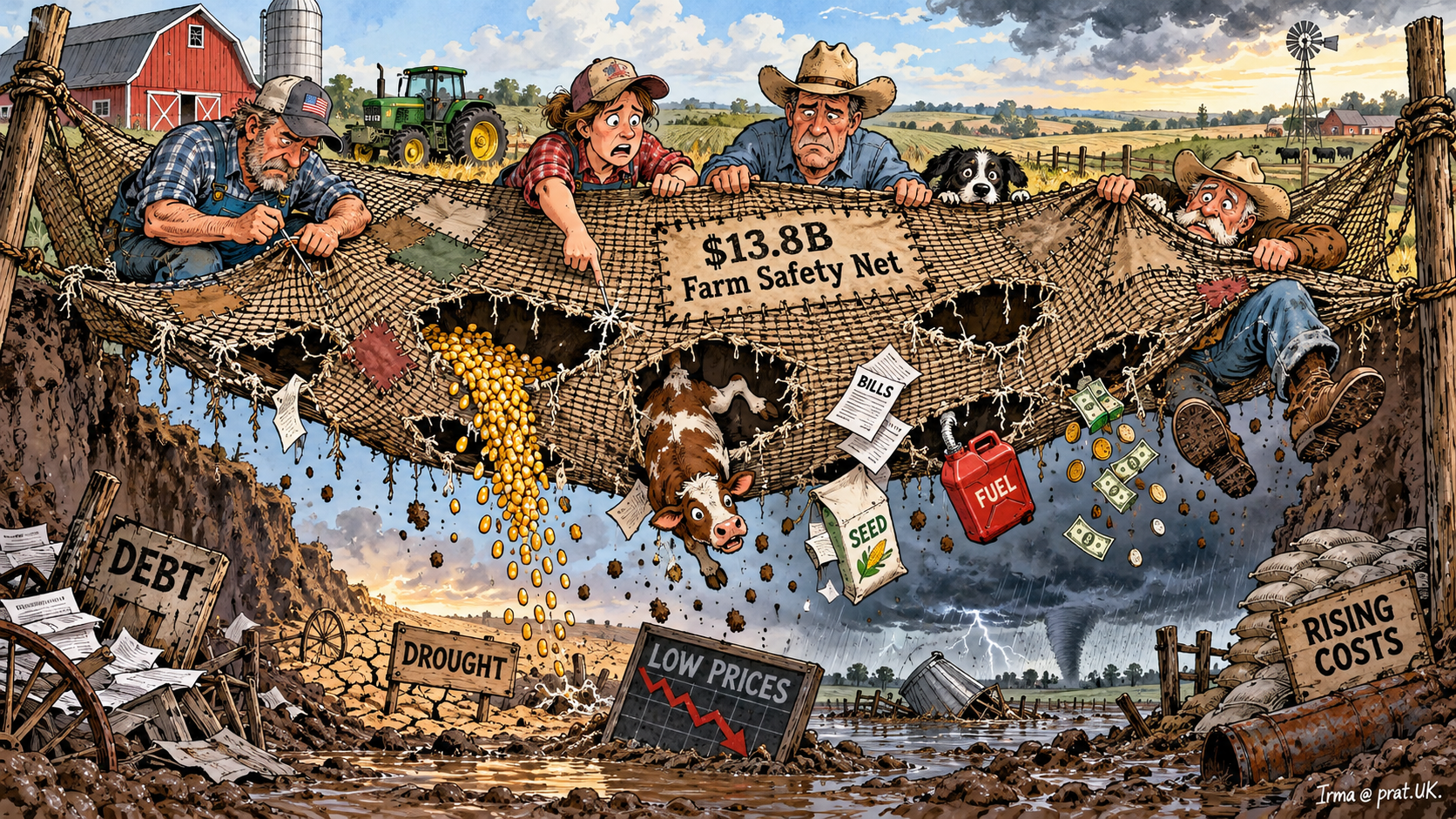
Why does the safety net favor farms with a track record?
Many programs rely on yield history, base acres, prior-year income or years in operation. Crop insurance uses past yields to set coverage. Commodity programs tie payments to historic acres. Lenders want financial statements and collateral. All of this makes sense for a farm that has been around, and all of it works against someone just starting.
A new operator may rent ground without a farming history on it, or take over a farm with a poor record. Coverage can come in lower than the real risk, and credit can cost more or be harder to get.
What kinds of gaps do beginners report?
Common complaints include low insurance guarantees because of limited yield records, little or no commodity program base, high land and equipment costs, trouble getting credit, and uncertainty about how to apply for anything. Paperwork that takes an experienced farmer an hour can take a beginner a week, and a mistake on an application can mean missing a sign-up window that does not return until next year.
General education sources like USDA RMA and Farmers.gov explain program basics, and you should confirm what you qualify for and when sign-up closes with the agency.
- Yield histories that do not exist yet
- Commodity program base acres that go with the land, not the new operator
- Higher borrowing costs or tighter credit
- Rented ground that changes year to year
- Not knowing which office to call first
What help exists?
Federal and state programs include provisions aimed at beginning farmers and ranchers. FSA farm loans include options designed for new producers, and crop insurance rules sometimes allow special treatment for beginners. Terms and eligibility change, so read the current rules on the agency pages or ask a local office.
Nonprofits, state agencies and extension programs also run training and mentoring. Check with OSU Extension and the Oklahoma Department of Agriculture, Food and Forestry for what is currently offered in Oklahoma.
What do supporters and critics say?
Supporters of the current design argue that programs have to be tied to real production history to prevent abuse, and that targeted beginner provisions already exist. Critics respond that those provisions are too small, too hard to find and too complicated to use, and that the system rewards size and incumbency.
Some propose beginner-specific coverage, easier access to land and credit, or reforms to how base acres and yields are set. Others warn that more subsidies raise land prices and make entry harder. The USDA ERS publishes research on beginning farmers, and it is worth reading before you form a view.
What can a beginner do right now?
Start small and keep good records so you begin building a history. Ask about written leases, learn what crop insurance can and cannot do, and open a relationship with a lender early. Basic planning ideas are covered at this small farm information guide and the money basics at a farm finance guide.
Get to know your local FSA, NRCS and extension offices. They can tell you which options fit your stage. Do not assume you are ineligible without asking. Ask each office two questions: what is available to a producer with no history, and what records would improve my standing next year? The answers give you a plan, even if the answer today is not yet.
What does it look like in northern Oklahoma?
Around Enid, a young producer may try to start with rented wheat ground and a few stock cows. Rents, equipment and interest are all factors, and a bad drought or price slump early on can end the experiment. A mentor with experience can be worth as much as any program, because the right neighbor can explain what the forms never do, such as which landlord is fair, which dealer will wait and which county office will actually call back.
Over at farm.FM the farming section follows stories of new producers, and a farm.FM story about beginning farmers fits this subject. The agribusiness section keeps watching policy fights over the safety net.
Sources and further reading
- USDA Risk Management Agency: crop insurance
- Farmers.gov: USDA one-stop site for producers
- FSA Farm Loans: FSA direct, guaranteed, microloan and emergency loan information
- OSU Extension: Oklahoma State extension
- Oklahoma Dept. of Agriculture, Food and Forestry: state agriculture agency
- USDA Economic Research Service: farm economy data and analysis
Ask locally: Ask your county FSA office or OSU Extension educator which beginning farmer options fit your situation.